
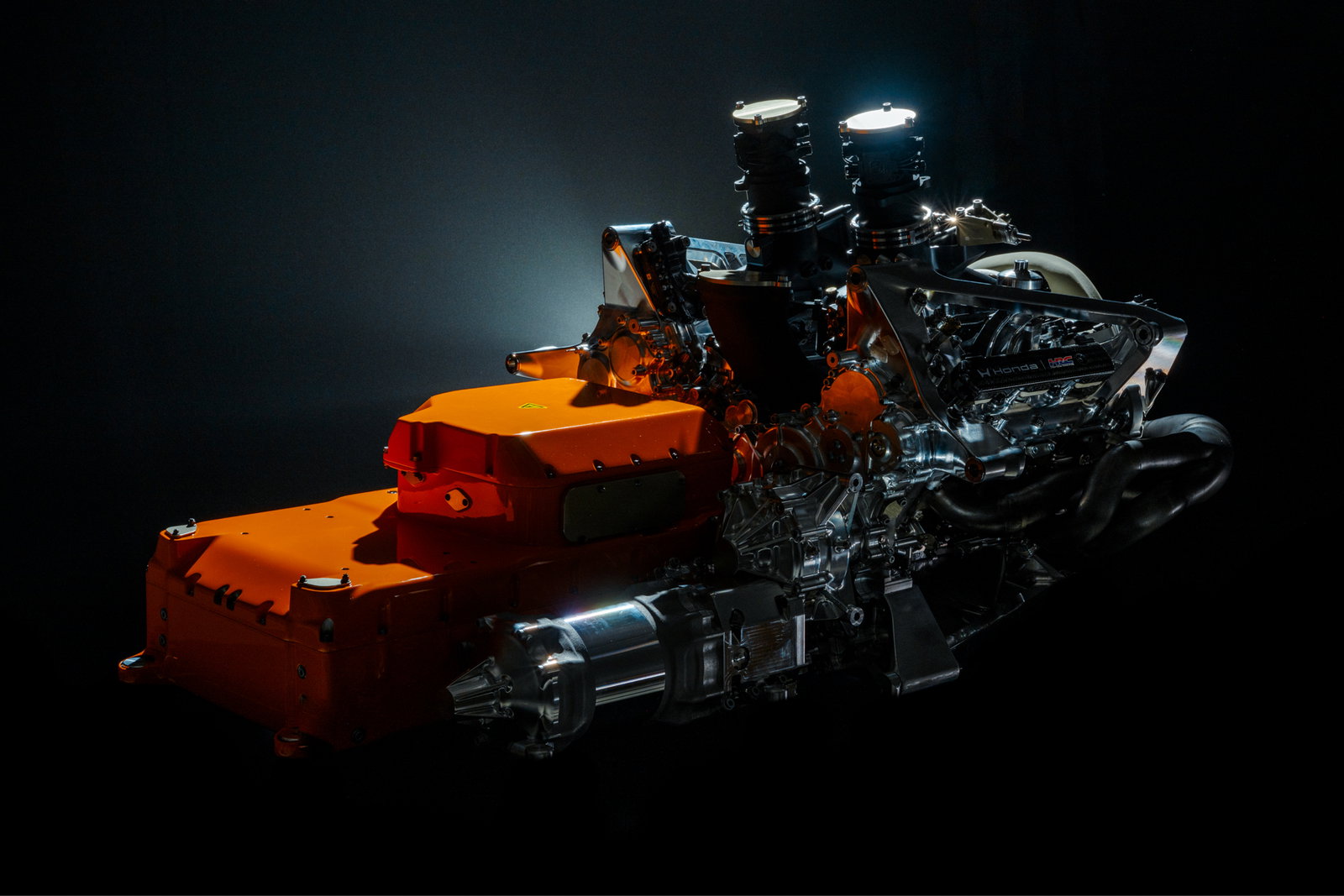
F1 2026 Power Unit - Image Credits: Honda Racing
F1 2026 Power Unit - Image Credits: Honda Racing
May 9, 2026, 2:09 AM CUT
Formula 1 to Remove 50:50 Power Split From 2027
The current hybrid power unit of Formula 1 has received substantial criticism from many fans and drivers. However, in light of recent events, the FIA has taken a big step, perhaps the biggest this season, to make racing better again.
In an online meeting attended by Team Principals, Formula One Management, and OEM representatives, the FIA announced ‘further evolutionary changes’ to the 2026 regulations, which already saw tweaks during the month-long break in April, caused by the cancellation of the Bahrain and Saudi Arabian Grand Prix.
A key factor stood out in the press release issued by the FIA. From the 2027 F1 season onwards, there will be less dependence on electric power. Instead of a 50-50 split between the combustion and battery output, it will be roughly 60-40. The electric power output will be reduced by 50kW, while combustion output is increased by 50kW, and fuel flow rates are also increased.
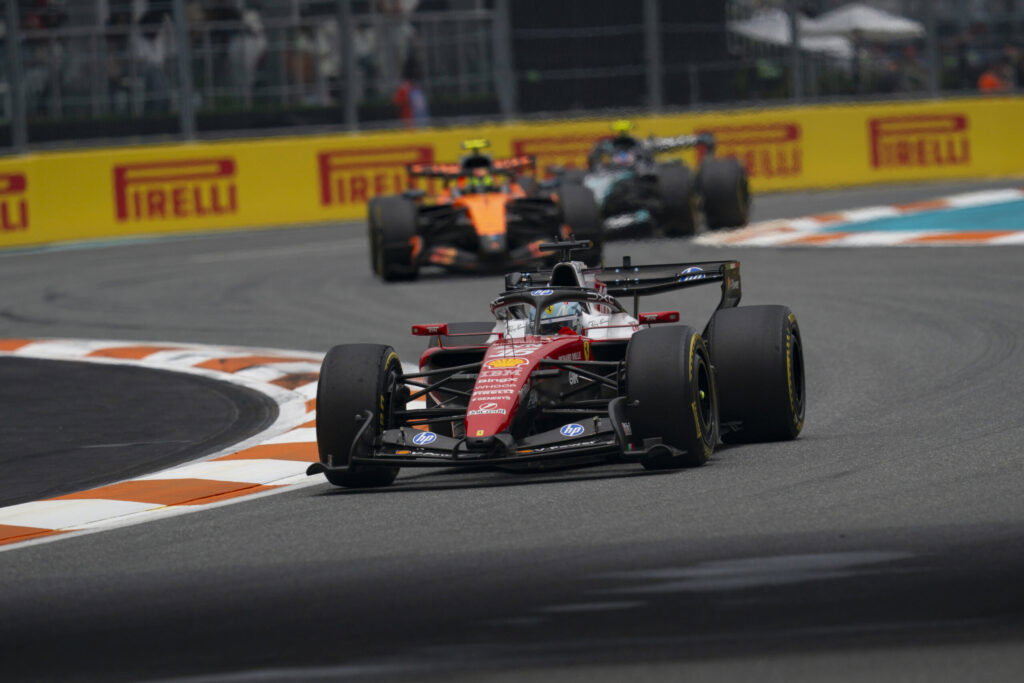
May 3, 2026, Miami, United States: Monegasque driver CHARLES LECLERC Scuderia Ferrari drives during the F1 Miami Grand Prix at Miami International Autodrome in Miami, United States. Formula 1 2026: Miami Grand Prix - Antonelli Wins PUBLICATIONxINxGERxSUIxAUTxONLY - ZUMAg147 20260503_fap_g147_050 Copyright: xJamesxGasperottix
May 3, 2026, Miami, United States: Monegasque driver CHARLES LECLERC Scuderia Ferrari drives during the F1 Miami Grand Prix at Miami International Autodrome in Miami, United States. Formula 1 2026: Miami Grand Prix - Antonelli Wins PUBLICATIONxINxGERxSUIxAUTxONLY - ZUMAg147 20260503_fap_g147_050 Copyright: xJamesxGasperottix
The current power unit drew a lot of flak for its ‘unnatural’ characteristics and excessive reliance on energy harvesting. It made drivers unable to go flat-out on long straights, and also caused massive speed differentials between two drivers in corners.
This issue was highlighted when Oliver Bearman crashed in the Japanese Grand Prix to avoid hitting Franco Colapinto, as there was a massive speed difference between the two. Following the feedback and the incident, the FIA rolled out tweaks to the regulations heading into the Miami GP.
They focused on reducing excessive energy harvesting, while also adding a cap on Boost mode, enhanced safety mechanisms during starts, and ensuring safety in wet conditions.
With increased combustion power, drivers can now focus more on going flat-out. Additionally, the consistent 350kW on the straights and the reduced 250kW output around corners will help prevent massive speed differences, such as the incident in Suzuka.
These changes are yet to be voted on officially by Formula 1 OEMs. Once that is done, it will be sent to the World Motor Sport Council. However, given that these changes have been agreed ‘in principle’ according to the press release, it is understood to be more or less approved.
This is also the first big step towards another bigger change, which is likely to come in 2031.
FIA President: It's only a matter of time before V8s are back in Formula 1
Just a few days ago, FIA President Mohammed Ben Sulayem said he is aiming to bring V8 engines back to F1 by 2031. While the regulations give FIA the power to effect the change in 2031, if four out of the six OEMs vote for the V8, it can be brought in a year earlier.
However, even if any OEM vetoes this in 2030, it only delays it by a year, and the FIA can bring it by force in 2031.
"It’s coming," Ben Sulayem told Reuters. "At the end of the day, it's a matter of time. In 2031, the V8, the FIA will have the power to do it, without any votes from the manufacturers. That's the regulations. But we want to bring it one year earlier, which everyone is now asking for."
Interestingly, the likes of Mercedes and Red Bull have publicly supported the idea of a V8 revival in F1. However, Mercedes feels it is only viable as long as the battery continues to be a part of the power unit in one way or another.
Do you think there will be a V8 power unit with a smaller battery? Tell us what you think in the comments!
Read more F1 news at Motor Culture!
Written by

Aaradhya Singh
Edited by

Yask Kotak